
The free BettorEdge MLB bet tracker
A ready-to-use spreadsheet that logs every MLB bet and auto-calculates ROI, units, and win rate by market. Drop your email and we will send it over.
- ✓Tag moneylines, run lines, totals, and F5 to see ROI per market
- ✓Log the starters and park so ROI beats a misleading win rate
- ✓Works in Google Sheets and Excel, yours free forever
Join 35,000+ bettors on BettorEdge. Free forever, no spam, unsubscribe anytime.
An MLB bet tracker spreadsheet is a sheet where you log every wager (date, matchup, market, odds, stake, and result) so it auto-calculates your ROI, units, and win rate. Baseball is the sport where tracking matters most, because a 162-game season produces a huge sample of mostly small edges, and many of your bets are plus-money underdogs. That means your win-loss record can look losing while your ROI is winning, which is exactly why you track dollars and units, not just wins. Start from the free BettorEdge bet tracking template and add a few baseball columns.
Which MLB bet types to track separately
Baseball has markets you will not find in other sports, and each one needs its own tag:
- Moneyline: the straight winner, and the primary way most people bet baseball. Because there is no dominant favorite most nights, plus-money underdogs are common, so a lot of your logged bets will pay more than even.
- Run line: baseball's point spread, almost always set at 1.5 runs. The favorite must win by 2 or more, the underdog can lose by 1 or win outright. Track it apart from the moneyline because the odds and the risk profile differ sharply.
- Totals (over/under): combined runs, and this is where the ballpark and weather do real work.
- First 5 innings (F5): a bet on only the first five innings, which isolates the starting pitchers and takes the bullpen out of the equation. If you bet the pitching matchup, F5 deserves its own tag.
- Team totals and player props: a team's run total, or props like strikeouts, hits, and home runs.
Why ROI and units read differently in baseball
The starting pitcher is the biggest single input in a baseball game, so the pitching matchup drives the moneyline, the total, and especially the F5. Log the starters and you can review whether you actually read pitching well or just guessed.
Park and weather come next. Coors Field sits at altitude where the ball carries and run totals climb, while a strong incoming wind or a pitcher-friendly park pulls them down. A total column without a park or weather note loses half its meaning at review time.
The key mindset shift: in a market full of plus-money dogs, win rate lies and ROI tells the truth. You can hit 48 percent of your bets and still profit if your winners pay +130 and your losers cost you 100. Flat betting (the same unit size every play) works well in baseball for this reason, because it lets underdog value compound without overexposing any one game. Set 1 unit at 1 percent of your bankroll ($10 on a $1,000 roll) and stake every bet the same. On BettorEdge you take these prices peer to peer against real people at community odds with no built-in vig, so the plus-money you log is the real number, not a shaded one.
Two example logged bets
Here is how two baseball wagers look in the tracker at BettorEdge community odds:
- Bet 1: Jun 3, Orioles moneyline vs Rays, moneyline, +125, 1 unit ($10). Result: win. Profit +1.25 units. Tag: ML underdog, starter edge.
- Bet 2: Jun 3, Under 8.5 F5 Mariners vs Astros, F5 total, -110, 1 unit ($10). Result: loss. Profit -1.00 unit. Tag: F5, two strong starters.
Notice how Bet 1 pays more than a unit because it was a plus-money dog. Over a season those add up, which is why ROI beats record as a scorecard. Building a multi-game ticket? Price it with the parlay calculator first, and if a line is posted in decimal or fractional odds, convert it with the betting odds converter so every row of your sheet is in one format.
How to use the tracker for MLB
Add these columns to the base template:
- A Market tag: moneyline, run line, total, F5, team total, or prop.
- A Starter column with both pitchers, so you can grade your pitching reads.
- A Park and weather note on totals (altitude, wind, roof) to explain over and under results.
- A Full game vs F5 flag so bullpen-driven late swings do not muddy your starter-based bets.
- Sort by ROI, not by record, and split moneyline dogs from favorites, since the dog bucket is where plus-money value shows up.
Ready to bet a full slate at fair prices? Sign up on BettorEdge and take MLB action peer to peer, vig free, against real people instead of a house that profits when you lose.
MLB bet tracker FAQ
What should an MLB bet tracker spreadsheet include?
Include date, matchup, market (moneyline, run line, total, F5, team total, or prop), the odds in American format, stake in units, result, and profit or loss. For baseball, add columns for the starting pitchers and for park and weather, and flag whether a bet is full game or first five innings. Those fields explain most of your baseball results.
Why does win rate mislead in baseball betting?
Baseball has plus-money underdogs almost every night, so your winners often pay more than one unit. That means you can win under 50 percent of your bets and still profit, or win over 50 percent and lose money if you keep backing short favorites. Track ROI in units, not just your record, to see whether you are actually ahead.
What is an F5 bet and should I track it separately?
F5 means first five innings, a bet graded only on the first five innings of a game. It isolates the starting pitchers and removes the bullpen from the equation. Yes, tag it separately, because it rewards pitching analysis rather than bullpen and late-game variance, and mixing it with full-game bets hides how well you read starters.
How do park and weather affect MLB totals I track?
Ballparks and weather move run totals. Coors Field sits at altitude where the ball carries and totals rise, while strong incoming wind or a pitcher-friendly park lowers them. Note the park, wind, and roof next to every total you log so you can later tell whether your over and under reads hold up across different conditions.
How should I size units for MLB betting?
Set 1 unit as 1 percent of your bankroll, so a $1,000 bankroll makes 1 unit $10, and flat bet the same size every play. Flat betting suits baseball because the season is long and edges are small, so it lets plus-money underdog value compound over a large sample without overexposing any single game.
Is BettorEdge good for tracking MLB bets?
Yes. BettorEdge is a peer-to-peer betting marketplace where you bet against other real people at community odds with no built-in vig. The plus-money you log is the true price rather than a shaded one, so your tracked baseball ROI reflects your real edge instead of a house margin.
The full bet tracking template
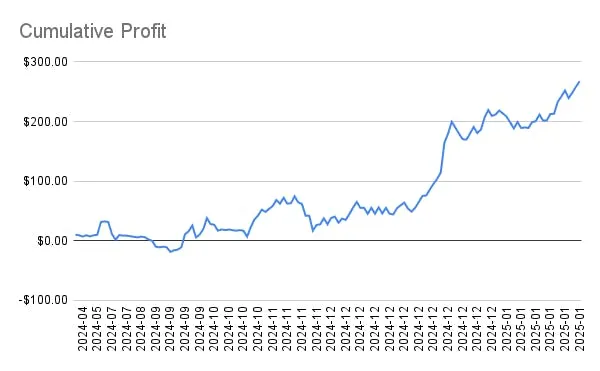 Full previewSports Bet Tracking TemplateLearn how to effectively track sports bets to improve your strategy, manage your budget, and make data-driven decisions for better outcomes.Read the full preview →
Track your bets and size your units
Build your parlay where the odds are better.
Sportsbooks pad every leg with vig, so long parlays are where the house wins most. On BettorEdge you set your parlay against real people and keep more of the payout.